











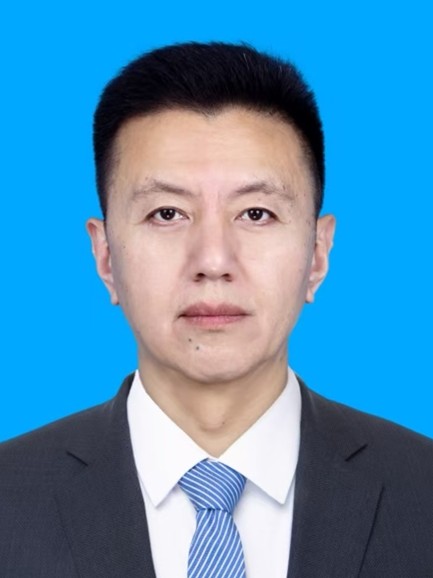

Lev Utkin
D.Sc. (Tech.), Professor, Peter the Great St. Petersburg Polytechnic University, Russia
Conditional treatment effect models under uncertainty of training data
Conditional treatment effect models estimate heterogeneous responses to interventions based on individual covariates, enabling personalized decision-making in clinical medicine, equipment maintenance, and economic policy. Estimating these effects typically involves dividing subjects (patients) into treatment and control groups and comparing their outcomes. However, a fundamental challenge in estimation is that an individual's counterfactual outcome is unobservable; we can only observe the outcome under either the treatment or the control condition, never both. Additionally, training data often contains uncertainty, particularly when target variables are interval-valued, such as in the presence of censored observations. To address these challenges, existing treatment effect estimation models are analyzed, and novel attention-based approaches that explicitly account for training data uncertainty are introduced.
Speaker BIO
Professor of the Higher School of Artificial Intelligence in Peter the Great St. Petersburg Polytechnic University, Saint-Petersburg, Russia. Professor, DSc. Head of the Research Laboratory of Neural Network Technologies and Artificial Intelligence in the same university. In 1986 he graduated from St. Petersburg State Electrotechnical University (former Leningrad Electrotechnical Institute). He holds a Ph.D. in Information Processing and Control Systems (1989) from the same university and a D.Sc. in Mathematical Modelling (2001) from St. Petersburg State Institute of Technology, Russia. Awarded an Alexander von Humboldt Foundation Fellowship (2001-2003). Member of the Society for Imprecise Probability Theory and Applications (SIPTA) and the International Society on Multiple Criteria Decision Making (ISMCDM). Author of more than 300 scientific publications, including AI journals: Neurocomputing, Neural Networks, Knowledge-Based Systems, Applied Soft Computing, AI in Medicine, etc. Research interests are focused on machine learning, imprecise probability theory, decision making.